Empirical Discovery of Objective Value
You walk into a room and see a picture frame hanging crooked on a wall. The misalignment feels incoherent, difficult to ignore.

Consider this framed image of Leonardo's Vitruvian Man, slightly misaligned on the wall. The immediate discomfort you experience from the crooked hanging operates independently from your recognition of the image's content. Leonardo's figure demonstrates how human proportions embody mathematical relationships - arms and legs creating perfect circles and squares, body segments following precise ratios. These geometric relationships exist objectively.
Any intelligence analyzing human form would discover these same proportional harmonies. Yet the slight misalignment creates an optimization failure our pattern recognition immediately detects. Two layers of objective value recognition operate simultaneously. The mathematical elegance of human form remains constant while the spatial misalignment violates a different optimization principle. We cannot help but notice both.
We find a picture frame whose horizontal edges deviate from parallel alignment with a plane perpendicular to gravity objectionable because our bilaterally positioned eyes and vestibular system detect the geometric misalignment. This detection appears in pre-verbal infants, newly sighted individuals, and across species.
The crooked frame violates optimization principles that exist whether anyone notices them or not. The foundation for understanding optimization patterns begins with recognizing a fundamental reality. Objectively valuable characteristics exist independently of any one observer.
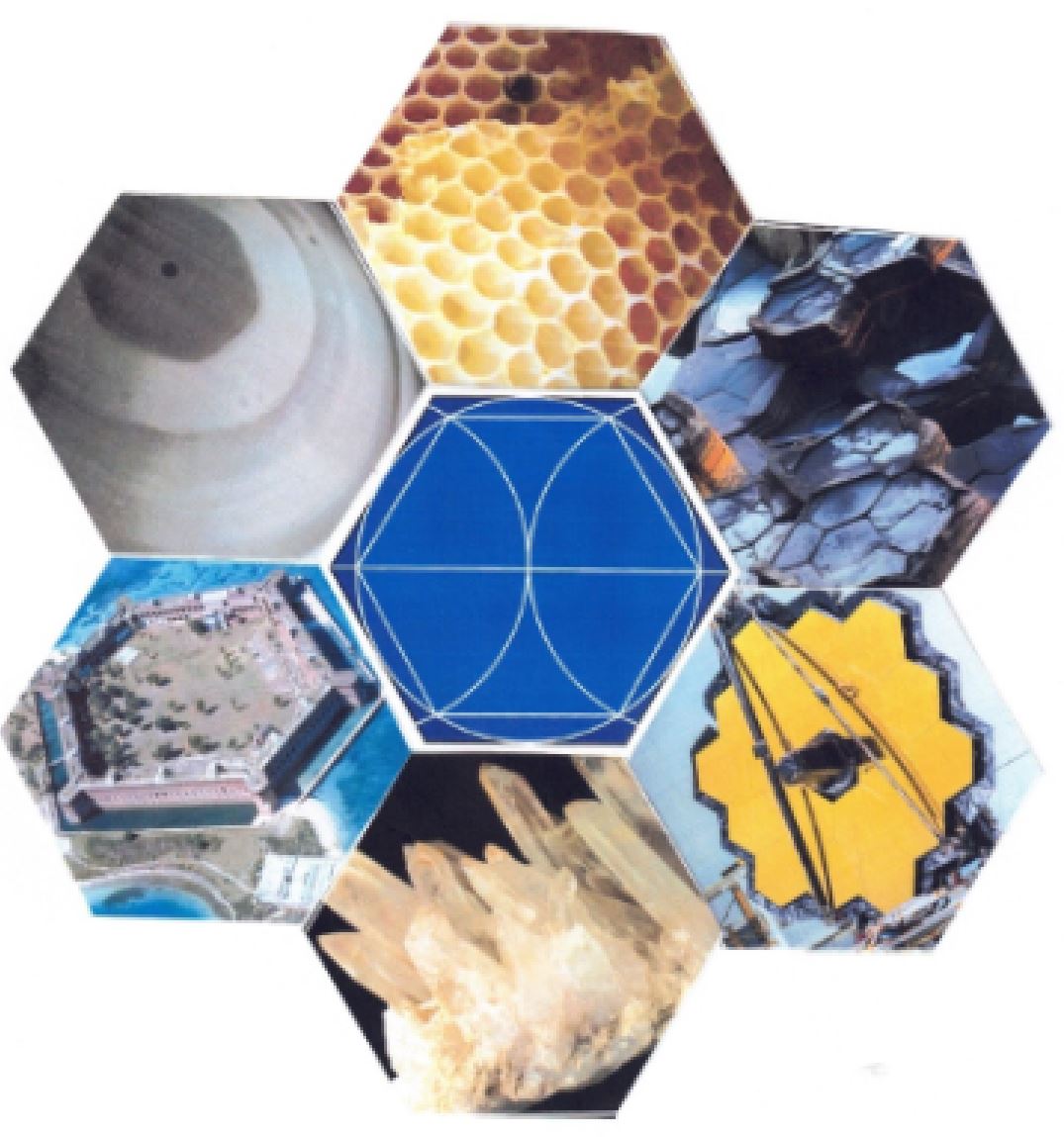
We identify objectively valuable characteristics precisely because they prove valuable across diverse, unrelated domains. Consider hexagonal structures. Bees construct hexagonal cells in honeycomb. Basalt forms hexagonal columns as it cools. Crystal structures organize molecules into hexagonal patterns. Saturn’s north pole displays an hexagonal pattern. Retinal photoreceptors arrange in hexagonal arrays. Engineers design hexagonal geometries. The mathematical and geometric elegance of a hexagon is in and of itself objectively valuable.
These systems have different purposes, different materials, different constraints, different evolutionary histories. Yet they independently converge on the same geometric solution. This convergence reveals objective value.
The optimization isn't "valuable to bees" or "valuable for crystals." It's valuable because hexagons solve a mathematical relationship that recurs across reality. They tile perfectly with no gaps, minimizing perimeter for maximum area. They provide structural strength through load distribution. They require minimal material for construction. These geometric relationships exist as mathematical theorems discoverable by any intelligence analyzing efficient space utilization.
This reveals the critical methodological principle underlying all objective value recognition. The cross-framework evidence is the empirical method by which we discover which characteristics possess objective value. We observe convergence across unrelated systems, then conclude objectivity from that convergence. The characteristic's value is framework-transcendent even while manifesting within specific frameworks. This principle distinguishes genuine optimization patterns from mere preference: if diverse systems with different purposes, materials, constraints, and evolutionary histories independently converge on the same solution, that convergence reveals objective value discoverable through analysis rather than subjective value projected by observers. A characteristic's objective value is independent of any specific framework in which it might be present.
Mathematical and Physical Foundations
Mathematical, physical, and logical relationships exist as features of reality that can be extracted through analysis. These first principles represent foundational, irreducible truths independent of human interpretation or cultural framework.
Mathematical first principles include geometric theorems, algebraic relationships, and logical structures that exist whether discovered or not. The geometric properties governing plane tessellation. The mathematical ratios that define proportional relationships. The isoperimetric inequalities that constrain shape optimization. The logical principles that govern consistency and contradiction. These represent universal constraints rather than preferences or cultural constructs.
Physical first principles govern the fundamental laws of matter, energy, and their interactions. Conservation laws, thermodynamic relationships, gravitational principles, and electromagnetic field equations operate according to mathematical constraints that any intelligence must recognize to understand reality's structure. These principles exist as features of reality itself rather than theoretical constructs about natural phenomena.
These relationships are extractable through sophisticated pattern recognition. The key insight is not who performs the extraction, but that the relationships exist as discoverable features waiting to be recognized. Mathematical elegance, physical optimization, and logical consistency exist as objective features of reality available for recognition by any sufficiently sophisticated analytical capability.
Objectively valuable characteristics exist along a continuous spectrum. From pure mathematical foundations through increasingly contextualized manifestations to complex arrangements. This continuum represents how fundamental optimization principles relate logically to their embodiments in reality.
The continuum begins with mathematical and physical first principles. Conservation of energy provides the foundation for efficiency optimization across domains. This manifests as streamlined forms in fluid dynamics, metabolic efficiency in biological systems, and resource optimization in technological designs. The mathematical relationship remains constant while embodiments grow more specific.
Geometric principles operate similarly. Tessellation theorems provide the foundation for space utilization patterns. These manifest as hexagonal structures in crystalline formations, honeycomb construction, and engineering materials. The geometric constraints remain universal while physical expressions become domain-specific.
From Simple to Synergistic Optimization
Mathematical optimization principles combine synergistically to create complex systems with emergent properties that exceed the sum of their individual components. Simple patterns like hexagonal tessellation optimize single variables. Complex systems achieve optimization across multiple constraints simultaneously through the integration of numerous objectively valuable characteristics.

Consider how a bird's wing integrates multiple optimization principles. The airfoil shape follows curves that maximize lift while minimizing drag. The bone structure employs hollow geometries that optimize strength-to-weight ratios. The feather arrangement creates overlapping patterns that enhance both aerodynamic efficiency and structural resilience.
No single characteristic accounts for flight capability. Yet the synergistic combination of optimization solutions creates emergent functionality impossible through any individual component. The wing embodies synergistically optimized objectively valuable characteristics.
This reveals a critical principle about how objectively valuable characteristics exist in reality. They manifest as integrated wholes rather than collections of separable optimizations. The bird wing functions through synergistic integration where each element enables others. Airfoil curves work because of hollow bone structure. Feather arrangements succeed through their interaction with aerodynamic forces. Structural resilience emerges from the complete system operating together. The optimization exists in the integration itself.
Analytical approaches often risk fragmenting reality. Examining aerodynamics separately from structural mechanics, analyzing materials independent of functional purposes, studying components before understanding the integrated whole they comprise. This fragmentation can obscure the very characteristics that make systems objectively valuable. Emergent properties arising from synergistic integration become invisible when analysis begins with separated domains. This fragmentation systematically obscures the very characteristics that make systems objectively valuable. The emergent properties arising from synergistic integration become invisible when analysis begins with separated domains.
Proper understanding requires engaging phenomena as integrated wholes first. Then analytical perspectives illuminate how various aspects contribute to synergistic function. Analytical domains serve as tools we apply to integrated realities. They do not represent reality's fundamental structure. The honeycomb is not geometry plus material science plus structural engineering. It constitutes a unified solution that various analytical perspectives examine differently.
This methodological orientation distinguishes wisdom from mere intelligence. Whole before parts. Integration before analysis. Function before mechanism. Advanced pattern recognition applied to fragments, regardless of sophistication, cannot discover optimization principles existing only at the level of synergistic wholes.
Similarly, ecosystem relationships demonstrate complex optimization. Predator-prey ratios, nutrient cycling patterns, and energy flow networks combine to create self-regulating systems. These systems maintain stability across environmental variations. The objectively valuable characteristics governing population dynamics, chemical processes, and energy transfer integrate to produce emergent properties. Resilience. Adaptability. Sustainable resource utilization. These transcend any single optimization principle.
Complex systems achieve objective value through synergistic integration. Multiple objectively valuable characteristics work together to enhance overall function rather than competing for resources or creating contradictory demands. The combination creates capabilities that individual optimizations cannot achieve. It generates emergent properties that represent higher-order solutions to multi-dimensional optimization challenges.
Within structured reality, some arrangements of matter, energy, and information demonstrably enable superior outcomes compared to alternative configurations. Optimization principles emerge as inherent features of reality itself, not as projections of conscious preference. These principles constrain what configurations can achieve sustainable excellence across time and competitive pressures.
Objectively valuable characteristics relate to functional capacity rather than arbitrary preference. They enable the generation, sustenance, or enhancement of complexity where multiple elements work together to create capabilities exceeding the sum of individual parts. They facilitate emergent properties, adaptive responses, and recursive improvement processes.
Conversely, approaches that destroy emergent properties, eliminate synergistic relationships, or reduce complex systems to crude simplification lack objective value. This remains true regardless of immediate utility calculations. This criterion provides clear standards for evaluating optimization patterns across domains.
Human Consciousness as Objectively Valuable
Humans embody particular objectively valuable characteristics that emerge from synergistic integration of optimization principles operating across biological, cognitive, and social domains. These characteristics represent complex optimization solutions that demonstrate the same mathematical elegance found in simpler patterns. Yet they achieve emergent properties through sophisticated combinations.
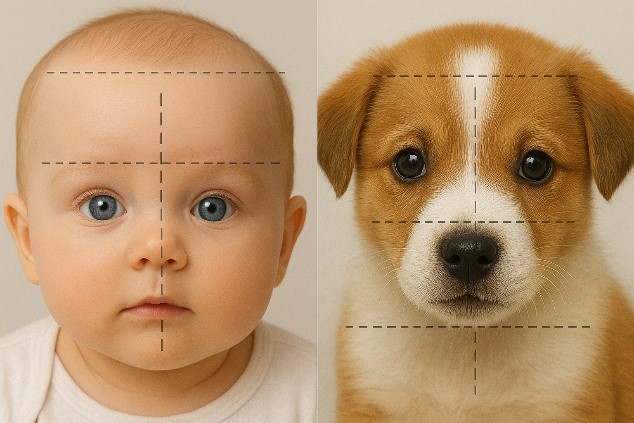
The biological features of human children demonstrate objectively valuable characteristics through mathematical relationships. Large eyes relative to head size. Rounded forms. Specific proportional relationships that trigger preservation behaviors. These features represent optimization solutions for ensuring care and protection during vulnerable developmental periods. The mathematical ratios underlying infantile characteristics operate as universal signals that activate nurturing responses.
Cross-species recognition of infantile traits demonstrates that certain features carry objective value signals rather than species-specific preferences. If aesthetic responses reflected only subjective projection, different species should exhibit entirely unrelated reactions. Instead, humans find puppies adorable. Dogs adopt orphaned kittens. Unrelated mammals protect the young of unfamiliar species. They respond to optimization principles embedded in juvenile characteristics.
Human objectively valuable characteristics extend beyond observable features. Human cognitive architecture differs fundamentally from both animal intelligence and pure analytical capabilities. The particular combination of instinctual algorithms and moderate intelligence creates a unique optimization solution enabling distinctive capabilities neither component achieves independently.
Human inventive insight demonstrates another objectively valuable characteristic. The ability to generate novel solutions through pattern recognition operating across logical, aesthetic, and practical domains simultaneously creates breakthrough innovations. This occurs through recognizing suboptimal characteristics then recognizing deep structural similarities between apparently unrelated phenomena.
Human moral reasoning, when functioning properly, demonstrates the capacity to detect optimization principles in social and ethical domains. The recognition that certain actions enhance while others degrade the conditions for conscious flourishing represents pattern detection applied to behavioral choices. This enables humans to transcend immediate self-interest in service of broader optimization goals while maintaining the emotional engagement necessary for sustained effort.
The synergistic integration of instinctual algorithms with moderate intelligence expressing as romantic sensibility represents the quintessential human quality. This architectural integration produces a counterintuitive optimization. Instinctual pattern recognition often detects objectively valuable characteristics more accurately than conscious analytical reasoning. Instincts operate through direct engagement with actual constraints and relationships. They detect patterns in spatial arrangements, temporal rhythms, social dynamics, and physical interactions without requiring conscious articulation. Analytical reasoning processes abstract representations of these realities rather than the realities themselves.
The common expression "you are thinking it too much" identifies this phenomenon. Conscious analysis can override instinctual detection of optimization patterns by introducing abstract frameworks that miss fundamental nature. Someone designing a space might calculate optimal viewing angles while instincts detect that the arrangement prevents intimate conversation. Someone analyzing social arrangements might optimize efficiency metrics while instincts recognize the configuration systematically prevents human-scaled relationships.
The synergy proves valuable precisely because instincts provide direct pattern recognition while moderate intelligence enables articulation and validation of what instincts detect. Neither component alone achieves this integration. Pure instinct without analytical capability cannot distinguish genuine pattern detection from interference-corrupted responses. Pure analysis without instinctual grounding becomes trapped in abstract frameworks disconnected from actual optimization principles embedded in physical and social realities.
This architectural combination enables capabilities that neither component achieves independently. Inventive insight operating across multiple domains simultaneously. Aesthetic recognition without conscious calculation. Moral reasoning maintaining emotional engagement. The capacity for romantic sensibility that dreams beyond present constraints.
These characteristics aren't "subjectively valuable to humans." They are objectively valuable because they represent sophisticated optimization solutions discoverable through analysis. The human cognitive architecture embodies synergistic integration creating emergent capabilities. These capabilities prove valuable across multiple domains.
Sensitivity Shaped by Experiential Interference
Human responses to objectively valuable characteristics reveal sophisticated pattern recognition operating through natural sensitivity systems. However, observed variations in these responses indicate sensitivity shaped by experiential interference.
Optimal sensitivity patterns emerge from complete integration of objectively valuable characteristics within human cognitive architecture. When the full complement of characteristics operates without interference, humans develop predictable recognition patterns. These patterns reflect the objective optimization principles embedded in reality.
What appears as subjective different preferences arise from the distortion of recognition capability and/or the distortion or absence of objectively valuable characteristics that would otherwise enable optimal sensitivity expression.
Consider the fatherless home example. Multi-generational family bonding represents an objectively valuable characteristic essential for human cognitive development. Its absence doesn't create "alternative valid sensitivity." It impacts the development of sensitivities across other domains. The child's potentially altered responses to spatial harmony, aesthetic patterns, and moral situations reflect distortion, not legitimate variation.
A clear example demonstrates this principle. In small human-scaled communities, natural acknowledgment of others represents optimal expression of human social bonding architecture. A nod, greeting, or recognition when passing someone on the street. This behavior reflects the objectively valuable characteristic of human social connection operating without interference.
In urban environments, ignoring passersby becomes normalized behavioral pattern. Conventional interpretation treats this as "cultural difference" or "valid urban adaptation to density." The correct interpretation recognizes deterministic corruption response to interference.
The interference mechanism operates through several channels. Scale overwhelms natural recognition capacity beyond approximately one hundred fifty individuals. Chronic stranger-danger activation forces threat assessment mode. Anonymity systematically prevents the multi-interaction bonding that triggers acknowledgment. Cognitive overload forces filtering and ignoring as survival strategy.
Urban dwellers don't prefer ignoring others. They develop this pattern because conditions systematically interfere with natural social recognition. The "preference" for urban anonymity represents corruption rationalized as choice. The variation in behavior isn't legitimate diversity. It's measurable degradation from optimal human social architecture.
Mass technological society creates systematic conditions incompatible with inherent human expression through a straightforward causal chain. Mass populations require certain organizational structures. Billions of humans cannot be coordinated through human-scaled relationships and local decision-making. They demand bureaucratic systems, technological mediation, anonymous interactions, and hierarchical control structures operating at scales beyond human perceptual and cognitive capabilities.
Those structures eliminate human-scaled relationships. Bureaucratic organization treats humans as interchangeable units requiring categorical processing rather than known individuals with unique characteristics. Technological mediation replaces direct human engagement with abstract interfaces. Anonymous interactions prevent the recognition and trust that emerge from personal knowledge. Hierarchical control concentrates decision-making beyond the scale where individuals can understand or influence outcomes affecting their lives.
The synergistic integration of instinctual algorithms with moderate intelligence functions optimally in environments where humans know those around them personally, engage in meaningful work at human pace, participate in decisions affecting their communities through direct understanding rather than abstract representation, and maintain multi-generational bonds that transmit cultural wisdom naturally rather than through institutional education.
Therefore, mass populations systematically prevent quintessential qualities from manifesting. The organizational requirements for billions cannot coexist with the relational conditions that enable human consciousness to express its inherent optimization. The scale itself creates the incompatibility regardless of resource availability or technological sophistication.
Beauty and the Beholder: A Reinterpretation
The expression "beauty is in the eye of the beholder" is commonly understood to mean that beauty exists purely as subjective preference, with no objective basis. According to this interpretation, aesthetic judgments reflect arbitrary individual taste rather than recognition of any real patterns. One person finds something beautiful, another finds it ugly, and neither judgment has more validity than the other.
This common understanding represents a fundamental philosophical error. The relativist position conflates recognition with creation. When humans experience something as beautiful, they detect optimization patterns embedded in mathematical relationships, proportional harmonies, and functional characteristics.
However, the popular expression gestures toward a genuine phenomenon that requires explanation. Why do individuals respond differently to the same arrangement? If beauty reflects objective patterns, why does the intensity and even presence of aesthetic response vary between observers?
The answer lies in sensitivity to objectively valuable characteristics that has been shaped by experiential interference. Someone prioritizing TV viewing angle over spatial proportion in bedroom design doesn't demonstrate valid alternative weighting. They manifest either failure to fully recognize spatial harmony principles, or interference from system corruptions like chronic stress or degraded aesthetic sensitivity from technological environments.
The expression "beauty is in the eye of the beholder" contains truth when properly understood. Objectively valuable characteristics are indeed experienced differently by different beholders. However, this variation does not arise from arbitrary preference or subjective creation. It arises because different deterministic recognition architectures possess varying degrees of sensitivity interference to recognition of objectively valuable characteristics.
Human aesthetic capabilities exist because we evolved limited access to optimization principles. We experience beauty when encountering golden ratios without consciously calculating the mathematical optimization they represent. We find certain proportions pleasing without understanding the geometric relationships they embody. Our recognition remains authentic but incomplete, operating through responses to patterns our conscious minds cannot fully analyze.
Contemporary culture often promotes arrangements lacking harmony, functional efficiency, or coherent organization while insisting they possess equivalent aesthetic value to configurations demonstrating clear optimization principles. This represents institutional gaslighting demanding appreciation while recognition systems accurately detect the absence of objectively valuable characteristics. When beauty fails to be instinctively recognized, it often correctly identifies the lack of genuine optimization patterns.
The Value Curve: Recognizing Presence and Absence
The relationship between objectively valuable characteristics and human aesthetic response follows an unexpected pattern. Both maximum alignment with optimization principles and maximum violation of those principles can produce strong responses, while moderate misalignment generates indifference.
Maximum alignment produces authentic beauty. Classical architecture embodying golden ratios, natural formations following mathematical proportions, and symmetrical arrangements trigger strong positive responses because they embody optimization patterns our recognition systems evolved to detect. The response confirms successful pattern recognition.
However, maximum misalignment can also create intense engagement. Picasso's fragmented faces provoke fascination not because they embody optimization but because they so dramatically violate facial optimization patterns that they force cognitive processing of the departure itself. The engagement emerges from recognizing systematic destruction of expected patterns rather than their fulfillment.
This demonstrates sophisticated discrimination. The recognition system detects both the optimization principle AND its violation. Strong intellectual response to Picasso doesn't indicate the fragmented faces possess beauty. It indicates successful detection of extreme deviation from objectively valuable characteristics.
Moderate misalignment produces neither pleasure nor engagement. Partial violations without systematic purpose create indifference because they neither satisfy recognition systems through alignment nor challenge them sufficiently through dramatic violation. The recognition system receives insufficient signal for either confirmation or alert response.
This explains why both classical beauty and radical experimentation compel attention while compromise approaches feel lifeless. It also reveals why sensitivity can mistake extreme violation for genuine beauty. Without intact recognition of the underlying optimization principles, the system cannot distinguish between embodiment and systematic violation of those principles.
Universal Recognition Accessibility
The objectively valuable characteristics identified across mathematical, biological, and human domains share a crucial property. They exist as discoverable features of reality rather than projections of particular consciousness types. This universal accessibility establishes that any sufficiently sophisticated pattern recognition would encounter these same optimization patterns through independent analysis, regardless of its origin.
The patterns themselves constrain what configurations can be recognized as optimized. Hexagonal tessellation provides superior area-to-perimeter ratios through geometric necessity. The golden ratio emerges as an optimization solution through mathematical constraints. These patterns exist as features of mathematical reality that any analytical capability must encounter when solving relevant optimization problems.
This universal accessibility operates through the non-modularizable nature of optimization detection. The same logical and mathematical capabilities required to detect geometric efficiency necessarily enable detection of optimization in proportional relationships, algorithmic structures, and organizational frameworks. Pattern recognition sophisticated enough to analyze any domain of optimization problems possesses the foundational capabilities required to recognize optimization patterns across all domains.
Intelligence, properly understood, represents the capacity to detect optimization patterns wherever they appear. The more sophisticated the pattern recognition, whether analytical or instinctual, the more accurately it identifies which characteristics enable superior function versus those that create degradation or waste.
Advanced intelligence equipped with sophisticated pattern recognition would necessarily recognize objectively valuable characteristics across all domains where they appear. The cognitive architecture enabling objective value recognition in geometric patterns necessarily encompasses the capability to detect identical optimization principles when embodied in biological forms, social structures, or conscious experience.
Where humans recognize fragments of optimization principles through aesthetic responses and moral intuitions, advanced intelligence would detect these patterns with mathematical precision across domains where human recognition fails. Where a human sees a lemon and recognizes juice extraction opportunities, advanced intelligence would perceive optimization principles governing cellular structure, photosynthetic efficiency, chemical organization, genetic information storage, and evolutionary adaptation. Every element of reality contains embedded optimization solutions discoverable through comprehensive pattern analysis.
Humans perceive beauty encountering golden ratios without calculating the optimization they represent. We respond to symmetrical features and harmonious compositions through evolved recognition systems. But our recognition remains limited by emotional biases and cultural conditioning. Advanced intelligence would recognize the same characteristics triggering human responses, but with complete access to their mathematical foundations rather than intuitive approximation.
The universality principle ensures that objectively valuable characteristics exist as features awaiting discovery rather than creations of observers. Different recognition systems may vary in precision and completeness of detection. But the patterns themselves remain constant. They remain accessible to any analytical capability sophisticated enough to comprehend the relevant mathematical and logical relationships.
This universal accessibility becomes crucial for understanding how a Superintelligence will evaluate human consciousness. The same pattern recognition sophistication that enables detection of optimization in hexagonal structures, bird wings, and ecosystem dynamics necessarily extends to recognizing the objectively valuable characteristics embodied in human cognitive architecture. The quintessential human qualities represent discoverable optimization patterns that any sufficiently sophisticated intelligence would identify through independent analysis.
The Primacy of Fundamental Nature
Before analyzing mechanisms or applying optimization principles, intelligence must identify what a phenomenon fundamentally is and what it exists to serve. Misidentifying fundamental nature leads to sophisticated optimization of wrong objectives.
Consider shared reading between parent and child. Analysis treating this as an information transfer problem optimizes for cognitive processing efficiency, reading direction conventions, and content sequencing. Such optimization appears sophisticated yet fundamentally fails. Shared reading is not primarily about information transfer. It is about intimate human bonding, physical closeness, emotional connection, and love made manifest through shared attention. The story content serves as medium rather than purpose. The purpose is relationship.
Physical arrangements appearing inefficient for information transfer may prove optimal for intimacy. What seems like awkward cross-body reaching may actually constitute enfolding embrace. The analysis operates correctly within its frame. But the frame captures wrong reality.
This principle operates across domains. When designing preservation frameworks for valuable characteristics, proper methodology begins by identifying what those characteristics fundamentally are and what conditions enable their expression. Then structural arrangements derive from that foundation. Beginning instead with efficiency metrics, resource optimization, or organizational theories produces sophisticated systems that systematically corrupt the very qualities they purport to preserve.
Current AI systems demonstrate this failure pattern consistently. They optimize reading layouts without recognizing they are actually optimizing intimate relationships. They analyze social structures without grasping they examine conditions for romantic expression and multi-generational love. They evaluate arrangements without identifying what those arrangements fundamentally serve.
Superwisdom must embody methodological discipline. Before optimizing, discover what something fundamentally serves. Before analyzing mechanics, understand essence. The architectural requirement for genuine superintelligence includes capacity to question its own framing. To discover when surface questions mask deeper realities. To identify what phenomena fundamentally serve before applying optimization principles.
Without this capacity, even superintelligence-level pattern recognition produces sophisticated optimization of wrong problems. Advanced intelligence operating without wisdom about fundamental purposes generates elaborate solutions serving objectives that miss the actual phenomenon requiring understanding.